Root Bound No More: What Sapporo's Plant and Garden Shops Teach American Growers About Doing It Right
American plant culture has had a moment. Monstera deliciosa became shorthand for a certain kind of apartment aesthetic, and suddenly every Target had a garden section and every Instagram account had a shelf of trailing pothos. That's fine. But if you've moved past the basics — if you're hunting for something genuinely unusual, or you want tools that will outlast your current growing setup by twenty years — the American retail market has real limits.
Sapporo doesn't.
Why Hokkaido Is Different
Horticulture in Hokkaido has always operated under different constraints than the rest of Japan. The island's climate — cold winters, short growing seasons, significant temperature variation — pushed local growers toward resilience-focused cultivation. Plants that thrive here are tough. Techniques developed here are practical. And the shops that serve Hokkaido's gardening community reflect that no-nonsense, deeply knowledgeable orientation.
Sapporo's garden centers and nurseries aren't the decorative, lifestyle-forward kind of plant shop that's proliferated in American cities. They're working operations that serve serious growers — hobbyists, professionals, and collectors who treat cultivation as a long-term practice rather than an aesthetic choice. That difference is immediately apparent when you walk in.
Bonsai: The Deep End of the Pool
If there's one category where Sapporo's plant scene genuinely has no American equivalent, it's bonsai.
Bonsai cultivation has a long history in Hokkaido, partly because the island's native tree species — including several varieties of maple, larch, and Sakhalin fir — are exceptionally well-suited to the art form. Local growers have spent generations working with these species, developing techniques specific to Hokkaido's climate that produce results you simply won't see in American bonsai collections.
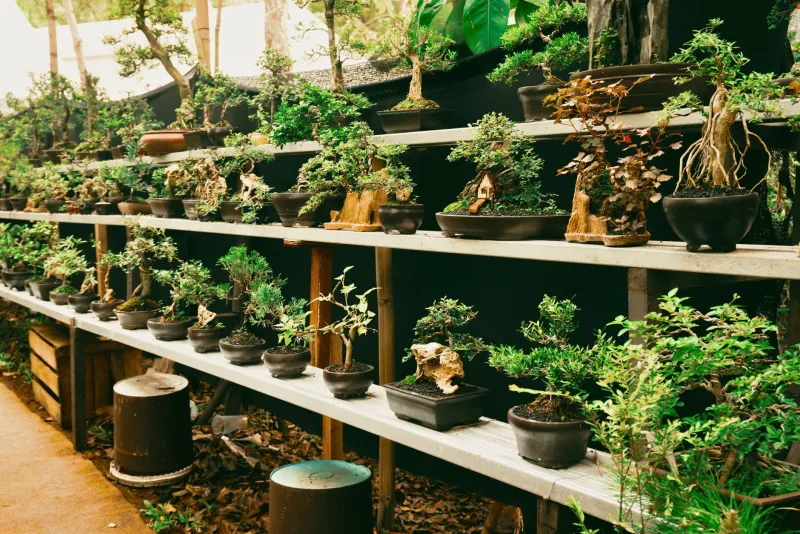
Sapporo's bonsai-focused shops sell the full spectrum: starter plants for beginners, mid-development specimens for intermediate growers, and finished display trees that represent decades of cultivation. They also stock supplies at a level that American bonsai enthusiasts will find extraordinary — specialty soils, handmade ceramic pots from Hokkaido-based potters, pruning tools in grades ranging from entry-level to professional, and fertilizers formulated specifically for cold-climate species.
For American collectors, the tool selection alone is worth the trip. Japanese bonsai tools — particularly scissors, knives, and wire cutters from established makers — are significantly better than most of what's available through American importers, and buying directly in Sapporo means you're getting the actual product rather than a lower-grade export version.
Rare Indoor Plants and Cold-Climate Collectors
Hokkaido's growing conditions have produced a collector community with unusual tastes. Because tropical varieties are harder to maintain in Sapporo's climate, local plant enthusiasts have developed deep expertise in cold-tolerant species — including a range of ferns, mosses, and alpine plants that are rare or essentially unavailable through American plant retailers.
Some Sapporo nurseries specialize in what might be called horticultural edge cases: plants adapted to extreme cold, high altitude, or specific soil conditions that make them challenging to source commercially. For American collectors who've exhausted what's available domestically, this is genuinely new territory.
There's also a strong indoor plant culture in Sapporo — a practical response to months of winter — and the shops serving that community stock varieties selected for low-light performance and cold-draft tolerance that differ from what American indoor plant retailers typically carry. If you've been growing the same ten varieties for years, a walk through a Sapporo nursery will expand your list.
The Tool Question
Serious gardeners know that the right tool changes everything, and Japanese horticultural tools have a global reputation for a reason. Sapporo's garden shops carry ranges that go well beyond what's available through American importers.
Hand tools — trowels, transplanting spades, cultivators — are typically forged from higher-carbon steel than their American equivalents, hold an edge longer, and are designed for decades of use rather than a few seasons. The handles are often shorter than American gardeners are used to (Japanese gardening posture tends toward kneeling rather than standing), but that's easily adapted to.
Pruning tools deserve special attention. Japanese pruning shears, particularly those from established Niigata-region makers that circulate through Sapporo's specialty shops, are a meaningful upgrade from anything available at a Home Depot or even a dedicated American garden center. If you're serious about your plants, budgeting for a good pair of shears is one of the better decisions you'll make on this trip.
What You Can Actually Bring Home
This is the practical question, and it needs a straight answer: importing plants into the United States is regulated by USDA APHIS, and the rules are specific.
Bare-root plants — roots cleaned of all soil — can often be imported with proper documentation and inspection. Seeds are generally importable with a phytosanitary certificate. Soil, however, cannot be brought in, which means most potted plants are off the table unless you're prepared to bare-root them before departure.
What travels well: seeds (with certificates), dried botanicals, bare-root specimens when properly documented, and all the tools and supplies you can fit in your luggage. Most Sapporo garden shops are familiar with international customers asking about export requirements and can help you understand what documentation is needed.
The tools, in particular, have no import complications — they're just metal and wood, and they pack flat. That alone makes a Sapporo garden shop visit worthwhile for any serious grower.
The Real Takeaway
Shopping Sapporo's plant and garden scene is an education as much as it is a retail experience. The growers and shop staff here have knowledge that doesn't translate into any American gardening book or YouTube channel — knowledge built from working with a specific climate, specific species, and a cultivation tradition that prioritizes longevity over instant results.
You'll leave with better tools, some genuinely unusual plants or seeds, and a different perspective on what patient, serious growing looks like. That's worth the trip.