Two Wheels, Four Seasons: What Sapporo's Bike Shops Know About Year-Round Riding That American Cyclists Don't
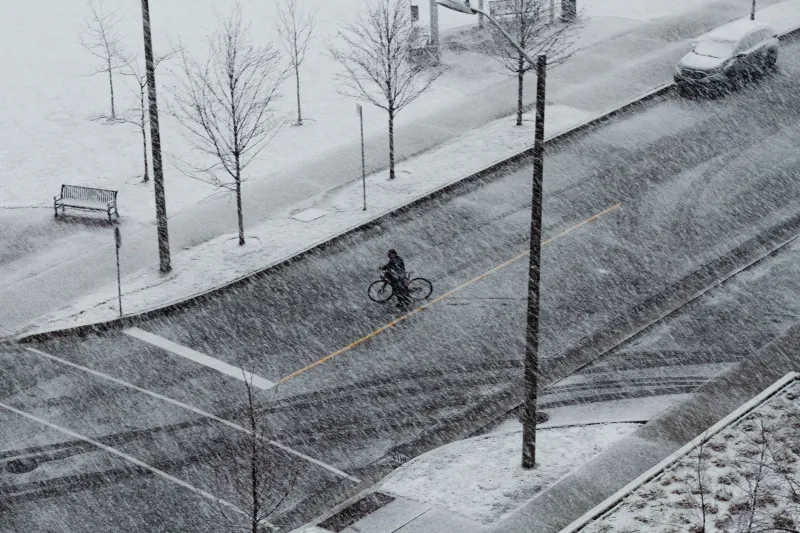
Sapporo gets, on average, around six meters of snow per year. That's nearly twenty feet of accumulated snowfall across a winter season that can stretch from November into April. By any reasonable metric, it is not a city where you'd expect a thriving bicycle commuter culture. And yet, walk through the Susukino district on a February morning and you will absolutely see people on bikes—navigating slush, packed snow, and the occasional sheet of ice with a calm that suggests they've figured something out.
They have. And the shops supplying them are stocking gear that the American cycling retail market, despite its size and sophistication, has largely failed to discover.
The Infrastructure Argument
Before getting into the gear, it's worth understanding why Sapporo's cycling culture is built the way it is. Japan's urban planning philosophy creates bike-friendly environments almost by default: separated cycling paths, low-speed traffic zones, and a general social norm around careful road-sharing that makes riding feel less adversarial than it does in most American cities. Sapporo extends this with dedicated snow-clearing routes on major cycling corridors, meaning the infrastructure itself supports year-round riding in a way that, say, Chicago or Minneapolis currently doesn't.
But infrastructure alone doesn't explain it. The gear matters enormously, and Sapporo's bike retailers have evolved to meet a genuinely demanding local need.
Studded Tires: The Obvious Starting Point
Any serious Sapporo cycling shop will carry a range of studded tires that makes the American selection look like an afterthought. Where US retailers might stock one or two studded options from a single brand, Sapporo shops typically carry multiple widths, tread patterns, and stud configurations from Japanese and Scandinavian manufacturers who've spent decades engineering for exactly this kind of riding.
The difference in selection matters because studded tires aren't one-size-fits-all. A tire optimized for hard-packed ice performs differently on wet slush, and a tire designed for a wider commuter bike won't suit a narrower urban frame. Sapporo shop staff understand these distinctions in practical terms—they're often year-round commuters themselves—and can match you to a setup based on the specific conditions you're riding in rather than just what's in stock.
For American cyclists, the revelation is usually price. Quality studded tires in Japan often land at meaningfully lower prices than equivalent products imported into the US market, partly because demand is higher and supply chains are better established.
Fenders, Lighting, and the Accessories Gap
Here's something American bike culture has largely gotten wrong: treating fenders and integrated lighting as optional accessories rather than essential components. In Sapporo, a commuter bike without full-coverage fenders and a dynamo lighting system is essentially an unfinished bike. The shops reflect this. You'll find fender options in materials and fitments that American retailers rarely bother to import, alongside hub dynamos, integrated front and rear lights, and wiring setups that eliminate battery dependency entirely.
For riders in cities like Seattle, Portland, or Boston—places with serious wet-weather riding seasons—this stuff is directly applicable. A dynamo hub powering a quality LED headlight and taillight means you never show up to work with dead batteries and you never get caught out after dark. Sapporo's bike shops have been selling this combination for years. American shops are slowly catching up, but the selection in Hokkaido remains significantly deeper.
Cold-Weather Clothing and Layering Systems
Japanese cycling apparel designed for cold-weather commuting operates on a different philosophy than the performance-oriented gear that dominates American cycling retail. Where US brands tend toward technical fabrics engineered for athletic output—racing tights, aerodynamic jerseys—Sapporo's commuter-focused shops stock layering systems designed for sustained comfort at moderate effort levels in extreme cold.
This means wind-blocking outer layers that work over regular clothes, insulated gloves calibrated for handlebar grip rather than ski poles, and thermal base layers that manage moisture without requiring you to ride like you're in a criterium. The aesthetic is more workwear than sportswear, which suits the actual use case: getting from your apartment to your office without arriving either frozen or soaked in sweat.
Several Sapporo shops carry Japanese-made cycling-specific outerwear from smaller domestic brands that haven't pursued international distribution. These pieces—often in muted, practical colorways—are genuinely hard to find outside Japan and represent some of the better shopping opportunities for the gear-minded cyclist.
The Bike Shop Culture Difference
American cycling retail has a reputation problem that serious cyclists acknowledge privately: a lot of shops are staffed by enthusiasts whose expertise runs deep on performance gear and shallow on practical commuting solutions. The implicit hierarchy tends to favor road racing and trail riding over the unglamorous business of getting to work in the rain.
Sapporo's bike shops don't have this problem, largely because the local market demands practicality. Staff at the city's better retailers are accustomed to solving real problems—a customer who needs a bike that starts in minus-ten-degree temperatures, holds cargo, and doesn't require a maintenance session after every snowy commute. That orientation produces a different kind of retail experience: more diagnostic, less aspirational, and ultimately more useful.
What to Buy and How to Bring It Home
Studded tires are the obvious target purchase, but they're also the most logistically complicated—a set of mounted tires is bulky and airlines have opinions about checked luggage dimensions. Unmounted tires in their packaging are more manageable, and if you're comfortable swapping tires yourself (or have a shop at home that can do it), this is worth the effort.
Accessories travel better. A quality dynamo lighting set, a set of cold-weather cycling gloves, or a wind-blocking commuter jacket can all be packed without drama. Fenders are trickier depending on the design, but many clip-on or bolt-on options fold or disassemble for travel.
For cyclists seriously interested in a full component or bike purchase, Sapporo retailers are generally experienced with international shipping for larger items. It's worth asking—several shops have done this before and have established processes.
The Bigger Picture
What Sapporo's cycling retail scene really offers American riders isn't just gear. It's a proof of concept. A city that gets more annual snowfall than almost anywhere in the continental US has built a functioning, everyday bicycle commuter culture by solving the actual problems—traction, lighting, warmth, cargo—rather than waiting for conditions to be perfect. The shops supplying that culture are worth exploring not just as retail destinations, but as evidence that year-round cycling is a solved problem. The solutions just happen to be stocked in Hokkaido.