Small Batches, Big Flavor: How Sapporo's Independent Breweries Are Rewriting the Rules on Japanese Beer
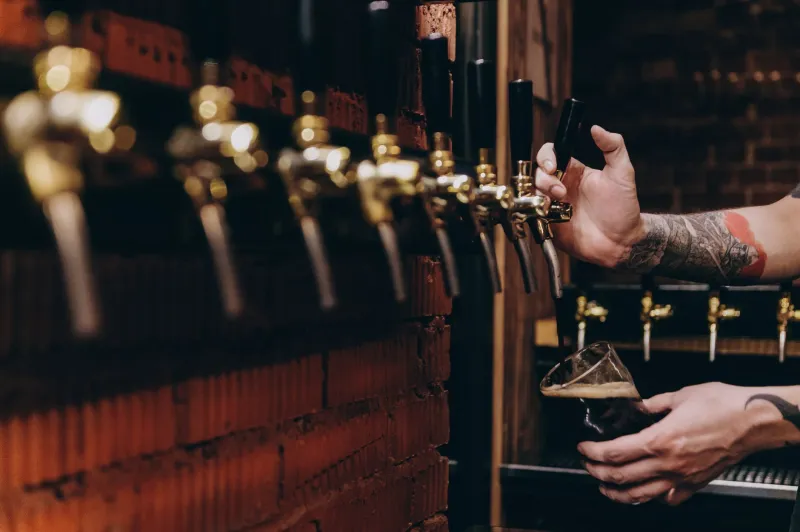
Most Americans think Japanese beer starts and ends with a cold Sapporo lager at a sushi restaurant. It's a perfectly fine beer. But it's also about as representative of what's actually happening in Hokkaido's brewing scene as a Budweiser is of American craft culture. Which is to say: not very.
Over the last decade, a quiet revolution has been fermenting in Sapporo. Independent breweries—some tiny, some mid-sized, all obsessed with quality—have turned the city into one of Asia's most interesting beer destinations. American craft enthusiasts who make the trip tend to have a similar reaction: mild shock, followed by an immediate recalibration of expectations.
Here's what you need to know before you go.
Why Hokkaido Makes Such Good Beer in the First Place
Before you walk into a single taproom, it helps to understand why Sapporo is positioned to make exceptional beer. The short answer: the water and the agriculture.
Hokkaido's snowmelt-fed water supply is famously soft and clean—ideal for brewing lighter, more delicate styles where mineral-heavy water would overwhelm the grain character. It's the same reason Hokkaido milk and dairy products are considered the best in Japan. The island's agricultural output is also unmatched domestically. Locally grown hops, heritage barley, and seasonal adjuncts like Hokkaido lavender, yuzu, and even locally harvested honey give Sapporo brewers a pantry that mainland Japanese cities simply can't replicate.
The result is a brewing culture that leans into terroir in a way that feels closer to California wine country than your average American craft brewery. These brewers aren't just making IPAs. They're making Hokkaido IPAs.
The Breweries Worth Blocking Out Time For
Sapporo's craft scene is concentrated enough that you can hit several spots in a single day if you're strategic about it.
Minami Brewery (Minami Ward) operates out of a converted industrial space and has built a reputation for dry, highly drinkable wheat ales that use local wheat strains. Their seasonal releases—particularly anything featuring Hokkaido honey or locally foraged botanicals—tend to sell out fast. Show up on a weekday if you want the full tap list.
Baristart Coffee & Beer is a dual-concept spot that sounds gimmicky until you actually try the coffee stout. The team collaborates with local roasters to produce a rotating lineup of coffee-integrated beers that are genuinely sophisticated. It's the kind of place that converts people who claim they don't like dark beer.
Hokkaido Brewing Co. takes a more educational approach—their tasting flights are designed to walk you through how the same base grain behaves differently depending on fermentation temperature and yeast strain. If you're a serious beer nerd, this is the stop where you'll end up staying twice as long as you planned.
For a broader overview of what the scene is producing right now, Sapporo Beer Museum (yes, the one associated with the big brand) actually has a dedicated section showcasing local independents. It's a good orientation point before you start hopping between smaller spots.
What American Craft Drinkers Notice Immediately
If you're used to West Coast IPAs or East Coast hazy pints, Sapporo's craft scene will feel like a slight recalibration. Japanese brewers—even the experimental ones—tend to favor restraint. Bitterness is deployed precisely. Sweetness is earned. The carbonation is often finer, the mouthfeel cleaner.
This isn't timidity. It's intentional. Japanese brewing philosophy borrows from the same aesthetic values that shape Japanese food and design: nothing unnecessary, everything purposeful. American drinkers who arrive expecting maximum hop punch sometimes leave preferring the more balanced Hokkaido approach. It sneaks up on you.
The lager tradition here is also worth respecting. Some of the most impressive pours in Sapporo are technically just really, really well-made lagers—crisp, precise, and about as far from mass-market as you can get while still using the same basic style.
The Shopping Angle: Bottles You Can't Get at Home
Here's where the trip gets interesting for shoppers specifically. Several Sapporo breweries produce bottled or canned limited releases that never leave Hokkaido. These aren't gimmick bottles—they're legitimate small-batch productions tied to seasonal ingredients or collaborations with local farms and food producers.
A few tips for hunting them down:
- Check the brewery's own retail shelf first. Most taprooms sell their bottled inventory directly, and the selection is usually more complete than any bottle shop in the city.
- Visit Sapporo's craft beer specialty stores. Shops like Beermania (check current hours and location before visiting) stock rotating regional selections and the staff generally speak enough English to help you navigate the more unusual releases.
- Ask about collaboration releases. Some of the most collectible bottles come from partnerships between breweries and local food producers—think a farmhouse ale made with a specific Hokkaido barley strain, produced in a run of a few hundred cases.
For transport, cans survive international flights better than bottles. Pack them in the center of your checked bag surrounded by soft clothing, and you're usually fine. Bottles can work too, but wrap each one individually and accept that there's always some risk.
A Note on Beer Bars Versus Taprooms
Sapporo has both, and they serve different purposes for the visiting shopper-drinker. Taprooms are where you go to understand a single brewery's identity—it's the most direct relationship between brewer and glass. Beer bars, on the other hand, are where you go to survey the scene. A good Sapporo craft beer bar will have 20 or more taps, mixing local Hokkaido producers with selections from across Japan.
If you've only got one evening, a beer bar gives you more data. If you're staying several days, alternate: one night at a bar to get oriented, one afternoon at a taproom to go deep.
The Bottom Line
Sapporo's craft beer scene doesn't ask you to abandon what you love about American craft brewing. It asks you to consider that restraint, precision, and local ingredients can produce something just as satisfying—sometimes more so. For American drinkers who make the trip, the revelation isn't usually that Japanese beer is better. It's that it's different in ways that are genuinely exciting.
And you can bring some of it home. That's not nothing.